

Key Takeaways
- Denmark faces a turning point after missing the 2026 World Cup, prompting a focus on rebuilding.
- The team’s inconsistent performance led to a surprising failure in qualification, revealing key weaknesses.
- A transition phase will likely involve new players and a redefined playing style to adapt to modern football demands.
- Denmark aims for long-term progress by investing in youth development and refining tactics for better team chemistry.
- Though challenges lie ahead, this moment presents an opportunity for a fresh start and potential long-term success.
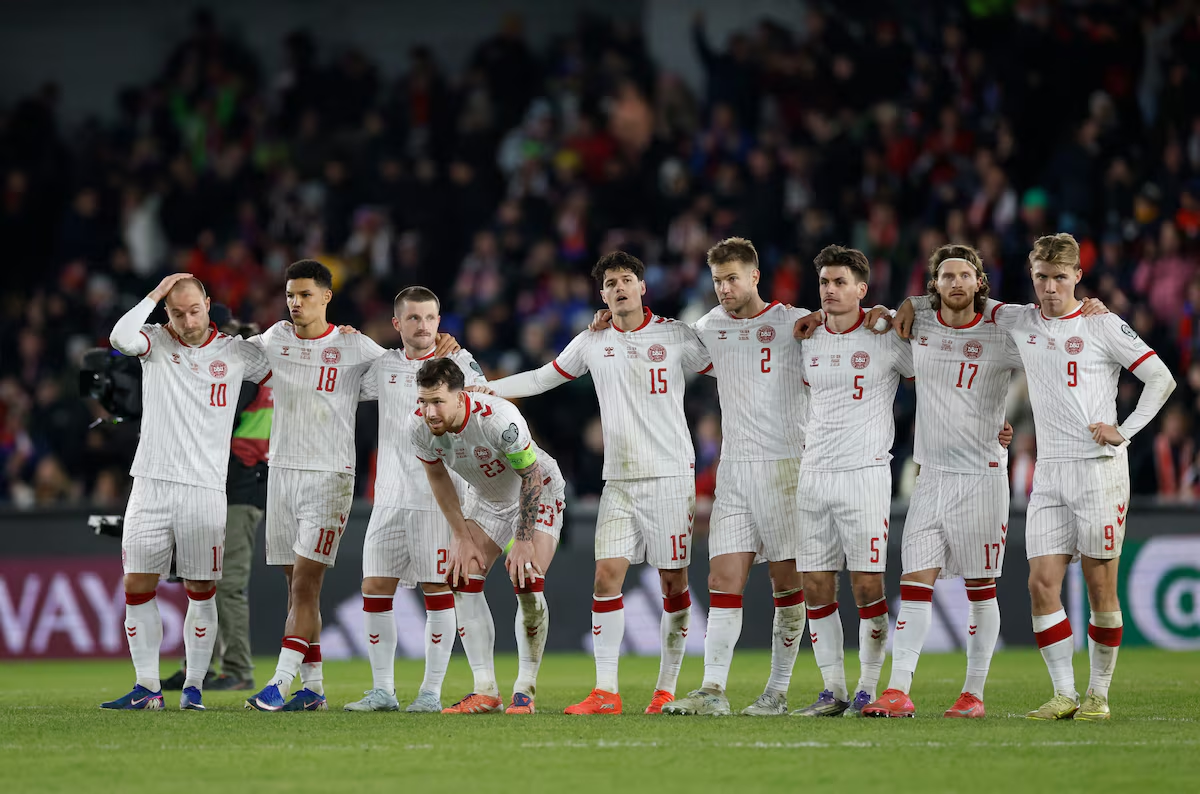
Denmark is now entering a period of transition after missing the 2026 World Cup, a moment that marks a clear turning point for the national team. With qualification slipping out of reach, the focus now shifts to rebuilding and shaping what comes next.
A Disappointing End to World Cup Hopes
Missing out on the 2026 World Cup came as a surprise to many. Denmark had built a reputation as a strong and reliable European side, but their qualifying campaign lacked consistency.
In several key matches, the team struggled to find balance. Defensive gaps and missed chances in attack proved costly. In the end, those small margins made a big difference.
Now, the disappointment has forced the team to take a step back and rethink its direction.
A Transition with New Faces
With Denmark entering this transition phase, changes in the squad are expected. Some experienced players may step aside, opening the door for younger talent to step up.
But this shift goes beyond just swapping players. It is about redefining how the team plays and adapting to the evolving demands of modern football.
The coaching staff will likely focus on developing new talent while keeping a solid core that can remain competitive in upcoming tournaments.
Building for the Future
Looking ahead, Denmark appears ready to focus on long term progress rather than quick fixes. Investing in youth development and scouting will be key to building the next generation.
This period also offers a chance to fine tune tactics and improve team chemistry. Creating a well balanced squad will be essential if Denmark wants to return stronger in future competitions.
While missing the World Cup is a setback, it could also be the reset the team needs.
Challenges and Opportunities Ahead
Transitions are never easy, and Denmark faces its share of challenges. Leadership changes, integrating new players, and rebuilding confidence will all take time.
At the same time, this is an opportunity for a fresh start. New ideas and renewed energy could help reshape the team’s future.
If handled well, this difficult moment could lay the groundwork for long term success.
Conclusion:
Denmark’s transition after missing the 2026 World Cup signals the start of a new chapter. It is a challenging phase, but also one filled with opportunity. With the right approach, the team can rebuild and come back stronger in the years ahead.