

Key Takeaways
- The Bernabéu tennis court transformation turns the iconic stadium into a practice hub for the 2026 Madrid Open.
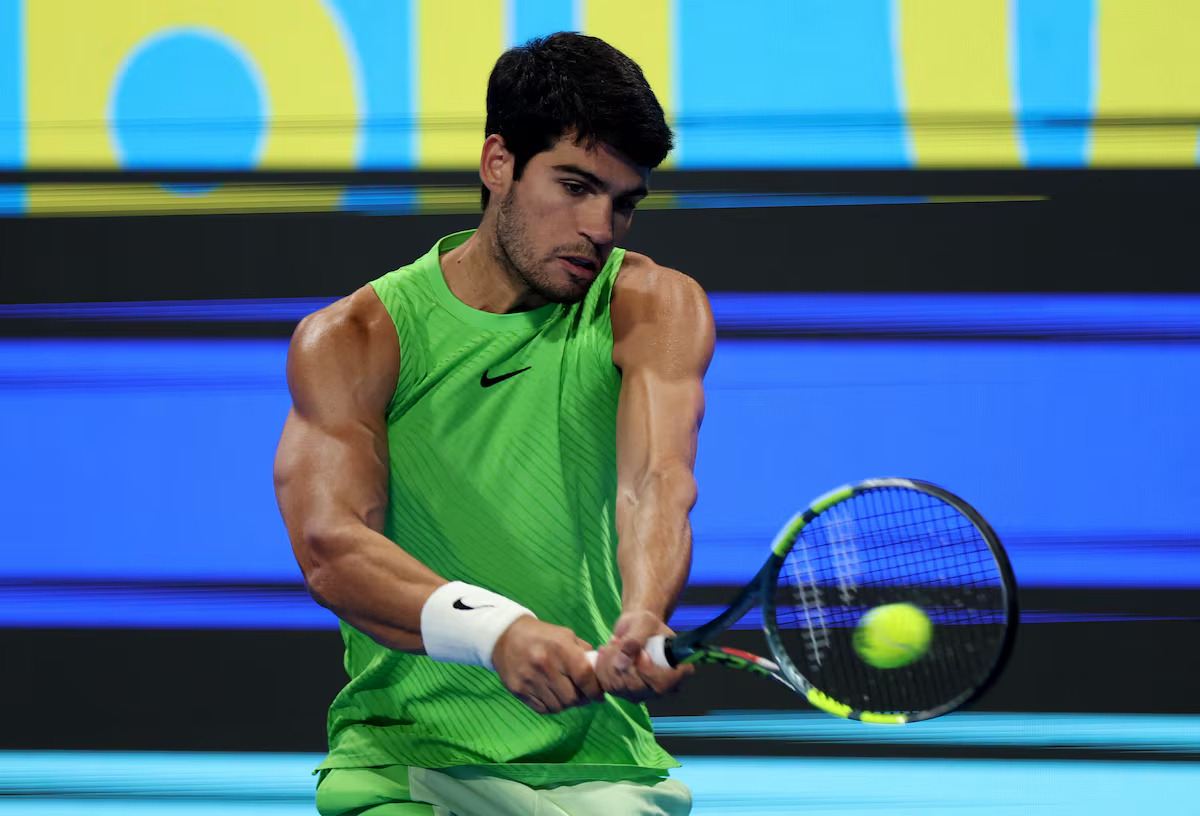
- Top players like Carlos Alcaraz will train on a temporary clay court, enhancing the competitive atmosphere.
- This transformation highlights a shift towards multi-purpose sports venues, maximizing usage and revenue.
- It strengthens Madrid’s status as a global sports capital by blending football infrastructure with tennis.
- Overall, the transformation could redefine future stadium design, promoting flexibility alongside tradition.
A football stadium known for roaring crowds and historic goals is about to trade its pitch for something entirely different, and it could change how major sporting events are experienced.
The Bernabéu tennis court transformation is turning one of football’s most iconic stadiums into an unexpected hub for elite tennis—and it’s already sparking global attention.
In a surprising crossover between two major sports, Real Madrid’s Santiago Bernabéu stadium will host a temporary clay tennis court as part of preparations for the 2026 Madrid Open. The initiative will allow top players, including Spanish star Carlos Alcaraz, to train inside the legendary venue during the tournament period. While official matches will still take place at the Caja Mágica, the Bernabéu will serve as a high-profile practice facility, offering a completely different environment for players.
A Unique Training Experience Inside the Bernabéu
This Bernabéu tennis court transformation is made possible by the stadium’s advanced retractable pitch system, which allows the football field to be removed and replaced with other surfaces. With Real Madrid scheduled to play away matches during this time, the stadium becomes available for alternative use without disrupting its primary function.
Players will benefit from both the scale and prestige of the venue, as well as its convenient location close to tournament accommodations. For rising stars like Alcaraz, the opportunity to train in such a historic setting adds a unique layer to an already competitive tournament atmosphere.
Why the Bernabéu Tennis Court Transformation Matters
Beyond novelty, the Bernabéu tennis court transformation reflects a broader shift in how modern stadiums are designed and utilized. Multi-purpose venues are becoming increasingly common, allowing organizers to maximize usage and revenue while delivering new experiences to fans and athletes alike.
This move also strengthens Madrid’s reputation as a global sports capital, capable of blending innovation with tradition. By merging football infrastructure with tennis preparation, the city is showcasing how iconic spaces can evolve to meet the demands of multiple sports.
A Glimpse Into the Future of Sports Venues
The Bernabéu tennis court transformation could signal a new era for stadium design, where flexibility becomes just as important as capacity or history. As technology continues to advance, more venues may adopt similar systems, enabling them to host a wider variety of events—from concerts to entirely different sports.
For fans, this means more dynamic and immersive experiences. For athletes, it opens up new training environments that combine performance with spectacle.
As the Madrid Open approaches, one question stands out: could this bold experiment redefine how we think about sports venues worldwide?