

The FIFA Women’s Champions Cup 2026 brings together leading women’s club teams from different continents. The competition features clubs that qualified by winning their regional championships. Matches are being played in London as part of the tournament’s final stage.
ASFAR from Morocco qualified by winning the CAF Women’s Champions League. The team secured its place in the semi-finals after defeating Wuhan Chegu Jiangda. ASFAR scored a late equaliser and then won the match in extra time. The result confirmed their spot against Arsenal.
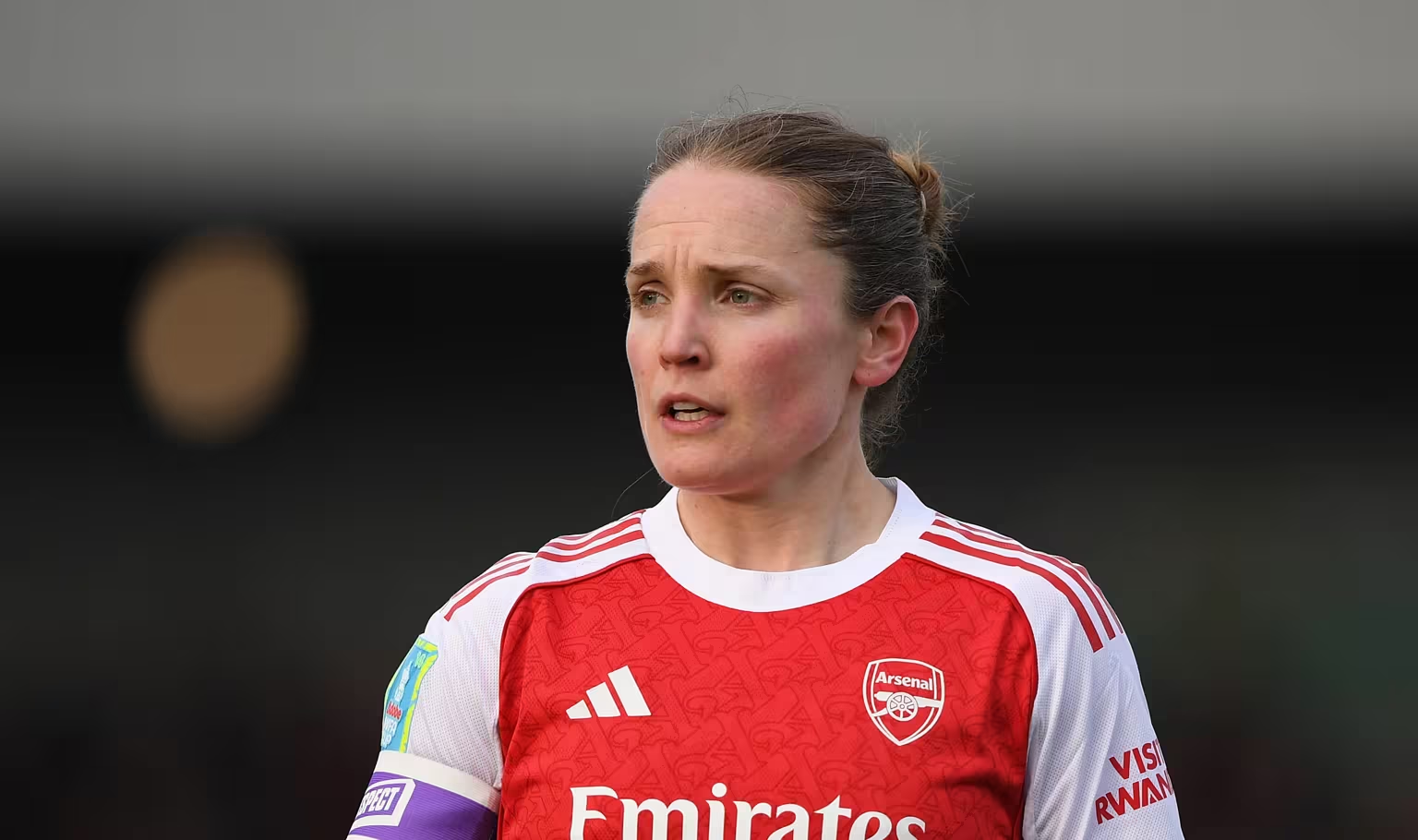
Arsenal qualified as winners of the UEFA Women’s Champions League. The English club entered the tournament as Europe’s representative. The semi-final against ASFAR places an African champion against a European champion in a knockout match.
The second semi-final features Gotham FC and Corinthians. Gotham FC earned qualification by winning the CONCACAF W Champions Cup. Corinthians qualified as champions of the Copa Libertadores Femenina. Both teams bring experience from international club competitions.
Several notable players are involved in the tournament. ASFAR captain Najat Badri leads the Moroccan side. Arsenal’s squad includes senior players with experience in domestic and international competitions. Gotham FC features players with international caps, while Corinthians brings players with extensive South American tournament experience.
Former Corinthians player Tamires and former Arsenal midfielder Kim Little are among those connected to clubs participating in the competition. These connections highlight the global movement of players within women’s football.
The matches are being held at established stadiums in London. Venues include Emirates Stadium and Brentford Community Stadium. These stadiums are hosting the semi-finals, third-place match, and final.
The tournament follows a knockout format. Teams that lose in the semi-finals play in the third-place match. The winners advance to the final to compete for the title.
The Women’s Champions Cup marks FIFA’s first global club competition for women. It replaces regional-only formats with a worldwide structure. Six teams represent six continental confederations.
The competition aims to showcase women’s club football at an international level. Teams compete under uniform regulations set by FIFA. Match results determine progression without group stages.
The final phase concludes with a championship match. The winning club will be crowned the first Women’s Champions Cup champion.