

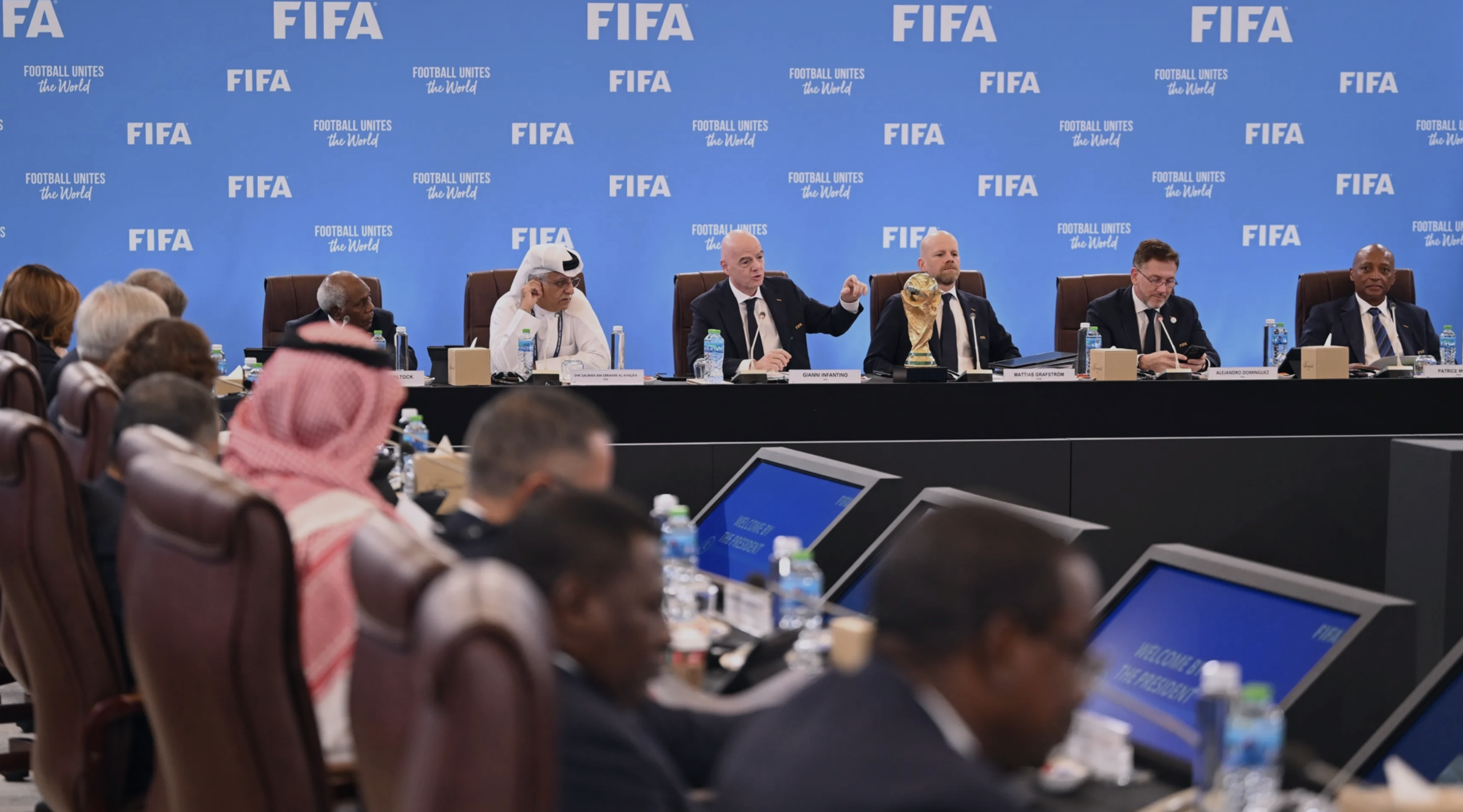
ZURICH / GLOBAL — The FIFA Council’s approval of a record-breaking financial contribution linked to the FIFA World Cup 2026™ marks a defining moment in the governance and economics of world football — setting a new benchmark for how the sport’s most lucrative event translates commercial success into global development, equity, and long-term legacy.
With the 2026 tournament poised to become the largest and most commercially powerful World Cup in history, FIFA’s decision underscores a strategic shift: the World Cup is not only a pinnacle sporting spectacle, but a global redistribution engine designed to uplift football ecosystems across all 211 member associations.
A Structural Leap in Football Reinvestment
While FIFA did not publicly disclose the exact figure, the organisation confirmed that the approved contribution surpasses all previous World Cup distributions, both in scale and scope. By comparison, FIFA redistributed approximately USD 7.5 billion across global football between 2016 and 2022, largely through the FIFA Forward Programme. The 2026 contribution is expected to significantly exceed prior World Cup cycles, reflecting unprecedented commercial forecasts.
This is not incremental growth — it is a structural leap in football reinvestment.
Why World Cup 2026 Changes Everything
The scale of the FIFA World Cup 2026™ fundamentally alters the financial equation:
- 48 national teams (up from 32)
- 104 matches across three host nations
- Expanded global broadcasting windows
- Stronger digital, streaming, and interactive revenue streams
With commercial revenues expected to reach historic highs, FIFA has made a clear governance statement: success at the top must cascade downward.
From Prize Money to Football Infrastructure
Crucially, this contribution is not limited to elite competition payouts. Instead, it is structured to reinforce football’s foundations across four interconnected layers:
1. Grassroots and Youth Development
Funding for academies, school programmes, community pitches, and early-stage talent pathways — particularly in under-resourced regions.
2. Women’s Football Acceleration
Expanded investment in women’s leagues, national teams, coaching education, and youth competitions — reinforcing FIFA’s ambition to make women’s football structurally sustainable, not episodic.
3. Technical Excellence and Governance
Support for referee training, coaching certifications, federation administration, and integrity frameworks — strengthening football’s professional backbone.
4. Competitive Balance and Inclusion
Targeted assistance for smaller and developing associations to improve facilities, competition access, and international readiness.
These investments will primarily be delivered through FIFA Forward, ensuring continuity, oversight, and accountability.
A New Model of Football Economics
Historically, major sporting events have concentrated wealth among hosts, elite federations, and top clubs. FIFA’s 2026 decision reinforces a contrasting philosophy: global football thrives only when its base is strong.
This approach:
- Reduces long-term competitive imbalance
- Expands the global talent pool
- Enhances regional football ecosystems
- Builds resilience beyond World Cup cycles
In governance terms, it positions FIFA not just as an event organiser, but as a development institution with global reach.
FIFA Leadership on Global Responsibility
FIFA President Gianni Infantino framed the Council’s decision as an ethical and strategic obligation:
“The FIFA World Cup is football’s greatest platform. Its success must benefit everyone — every confederation, every association, and every community where football is played.”
The Council’s unanimous approval signals broad consensus that financial solidarity is no longer optional in modern global sport — it is essential to legitimacy, growth, and sustainability.
Long-Term Legacy Beyond 2026
The significance of this decision extends well beyond a single tournament. Analysts suggest the 2026 contribution will:
- Influence future World Cup financial models
- Set expectations for transparency and redistribution
- Shape how other global sports bodies approach mega-event revenues
- Strengthen FIFA’s credibility with governments and development partners
In practical terms, federations will begin planning multi-year development projects aligned with the 2026 funding framework — embedding World Cup legacy into day-to-day football realities worldwide.
A Defining Moment for Global Football
The FIFA Council’s approval of a record-breaking contribution tied to World Cup 2026™ represents a turning point in how football measures success — not just by audience size or revenue, but by impact, inclusion, and long-term value creation.
As the world counts down to the most ambitious World Cup ever staged, FIFA’s financial commitment sends a clear message:
the future of football will be built not only on great matches, but on global opportunity.
Read more sports news here.
Sources
- Inside FIFA — FIFA Council approves record-breaking World Cup 2026™ financial contribution
https://www.inside.fifa.com/media-releases/council-approves-record-breaking-world-cup-2026-financial-contribution - FIFA Forward Programme — Global football development framework
- FIFA World Cup 2026™ — Tournament expansion and commercial outlook (FIFA.com)
- FIFA Governance & Financial Reports — Historical redistribution and solidarity data